
"Twice a day for ten days": reading a prescription label
Frequency, duration, strength, route — a label is dense with instructions and light on clock times. Here is what each part is telling you.
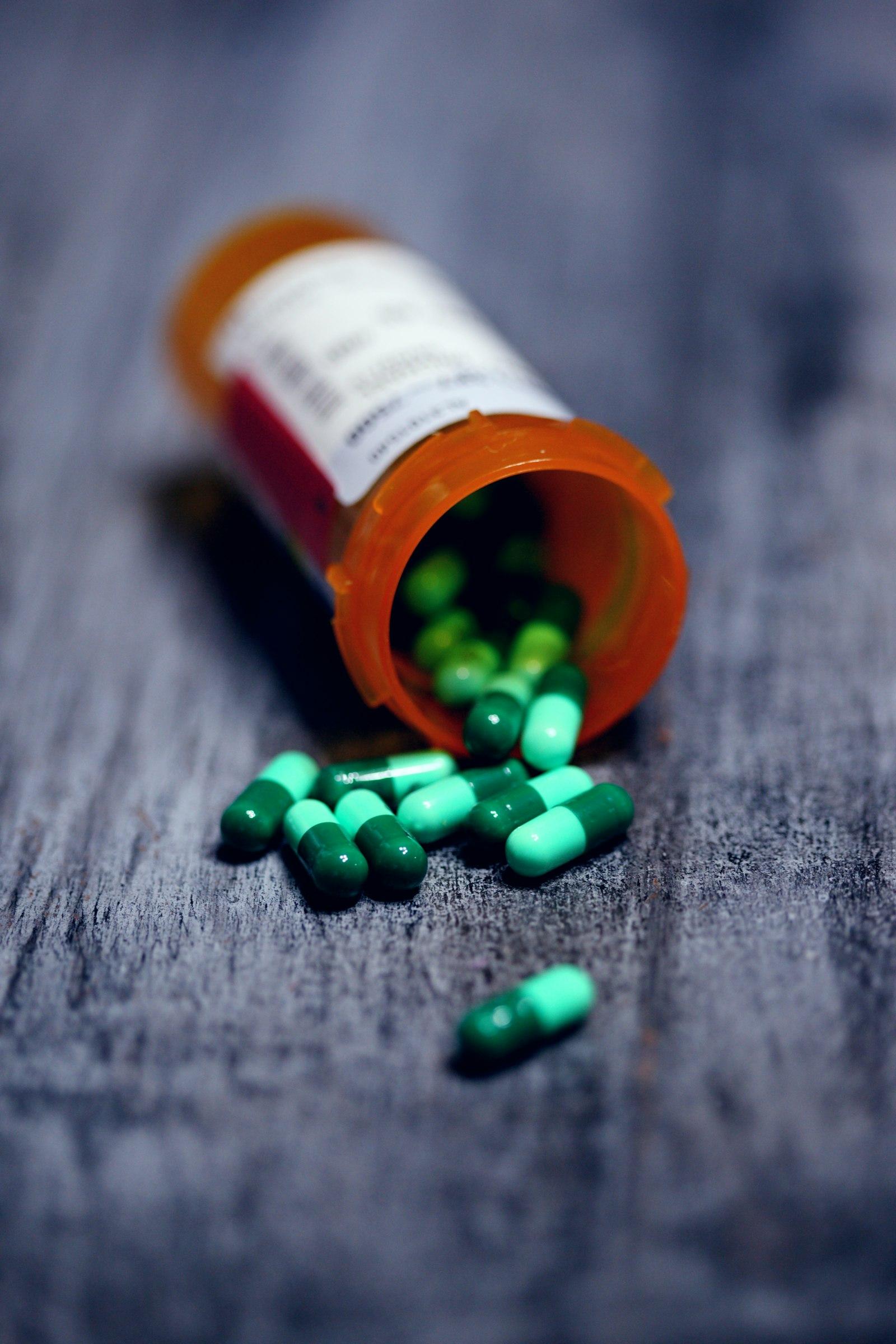
A prescription label is written for someone who reads twenty of them a day. It is compressed, abbreviated and — the part that catches people out — almost never says what time to actually give the medicine.
This post explains the notation. It does not tell you how much of anything to give, whether a dose looks right, or what to do if you miss one. Those are questions for the person who wrote the prescription and they are the right questions to ask.
The five things a label is telling you
Almost every veterinary label carries the same five pieces of information, in some order:
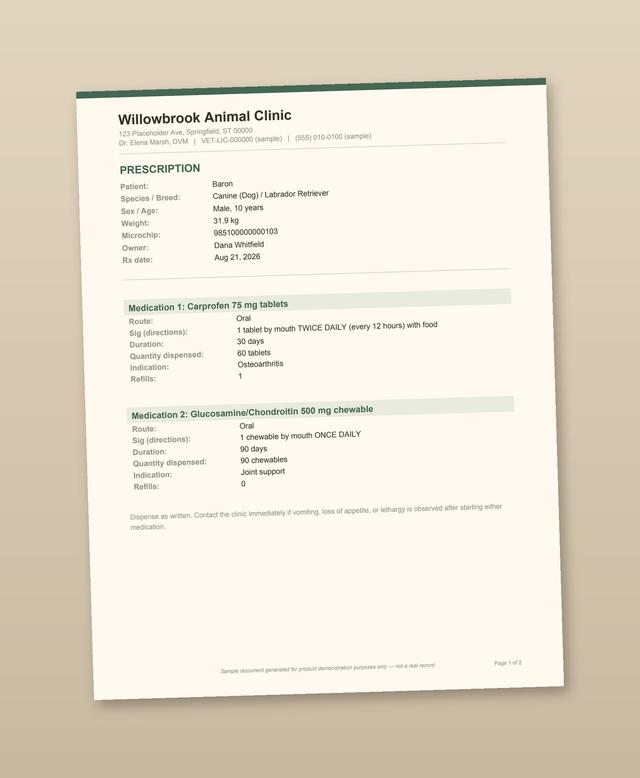
1. The drug, by trade name, active ingredient, or both. 2. The strength — how much active ingredient is in each tablet, capsule or millilitre. This is not the dose. 3. The amount per dose — how much of that to give at one time. "One tablet", "half a tablet", "2 ml". 4. The frequency — how many times a day. 5. The duration — how many days, or "until finished", or "ongoing".
Plus, usually, a route: by mouth, in the ear, in the eye, on the skin. And often a condition: with food, on an empty stomach.
Strength and dose are the two people mix up, because both are numbers with units. The strength belongs to the tablet. The dose belongs to your pet and was calculated for your pet's weight.
The abbreviations
Veterinary medicine inherited most of its shorthand from human pharmacy, which inherited it from Latin. The common ones:
- SID — once a day. (Human pharmacy uses QD; veterinary practice tends to prefer SID.)
- BID — twice a day.
- TID — three times a day.
- QID — four times a day.
- q12h, q8h, q24h — every 12, 8 or 24 hours.
- PO — by mouth.
- PRN — as needed.
The interval forms are more precise than the count forms and they are not interchangeable. "Twice a day" and "every twelve hours" describe the same number of doses and different levels of strictness about the gap between them. If a label uses one and you assumed the other, that is worth a call to the clinic rather than a guess.
Anything on a label you cannot read or do not recognise, ask. Pharmacy shorthand is not a test you are supposed to pass unaided.
Frequency is not timing
Here is the gap that makes medication courses hard to actually complete: the paper says how often and almost never says *when*. "Twice a day for ten days" is twenty doses and no clock times. You are expected to choose two times that are roughly twelve hours apart and that you will genuinely be present for.
That choice is the whole difficulty. 8am and 8pm is easy to say and hard to do on a Thursday. A dose missed because it was scheduled for a time you are never home is a dose missed all the same.
What the app does with that, precisely
When you photograph a prescription in EverPet and accept the parsed result, the reminder series is computed by a deterministic scheduler on the server — not generated as free-form text by a language model. It works out the number of occurrences, the spacing and the end date from the instruction on the paper.
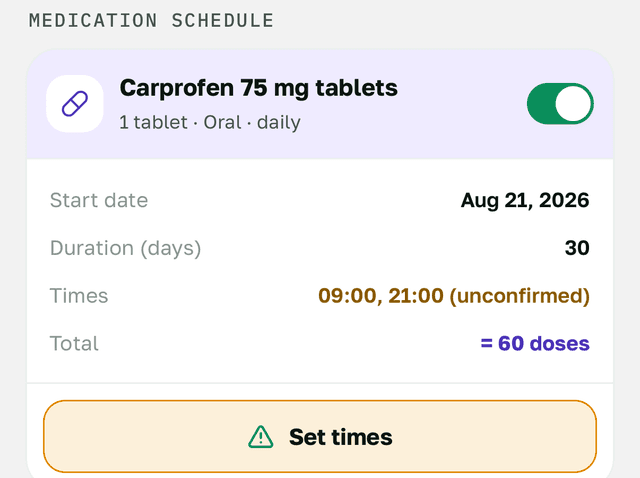
The clock time is the part it will not invent. If the document does not state one, the app asks you and the commit is blocked until an unconfirmed time is confirmed. That is a deliberate design decision: a schedule that quietly guesses 8am would be wrong silently, which is the worst way for a medication schedule to be wrong.
The result is one logical reminder with several times per day rather than several unrelated reminders — a multi-time group. Each occurrence is still independently completable, so a missed morning dose does not sweep the evening one away with it. There is a hard ceiling of six times per day on every plan. On the free tier you get one manual multi-time group; schedules that came from an AI-parsed prescription are exempt from that cap, on every plan. How the groups, recurrence and notification actions behave is set out on the reminders page.
Each completed occurrence writes itself onto the pet's timeline, so at the end of the course there is a record of the course actually happening rather than an intention to.
What it will never do
It schedules a course a vet already prescribed. It does not suggest a dose, check whether a dose looks reasonable, judge whether the prescription is appropriate, or interpret anything medical. The AI in EverPet never diagnoses and never gives medical advice — not as a setting, as a rule.
It is also specifically a prescription pipeline. It does not build vaccination schedules; that is a different kind of thing, decided by your vet and the app does not generate one.
Finishing the course
Two things worth asking the clinic when you collect a prescription, because both are easier to answer then than at 10pm on day six:
- What should I do if a dose is missed?
- Should this be finished even if the symptoms stop?
Write the answers down somewhere that is not your memory. The label will not have them.
Related
Get EverPet
Free to start, on iOS and Android.