
How to check a breeder before you buy a puppy
Paperwork, premises and the questions that are hard to fake — a list to work through before a deposit leaves your account.
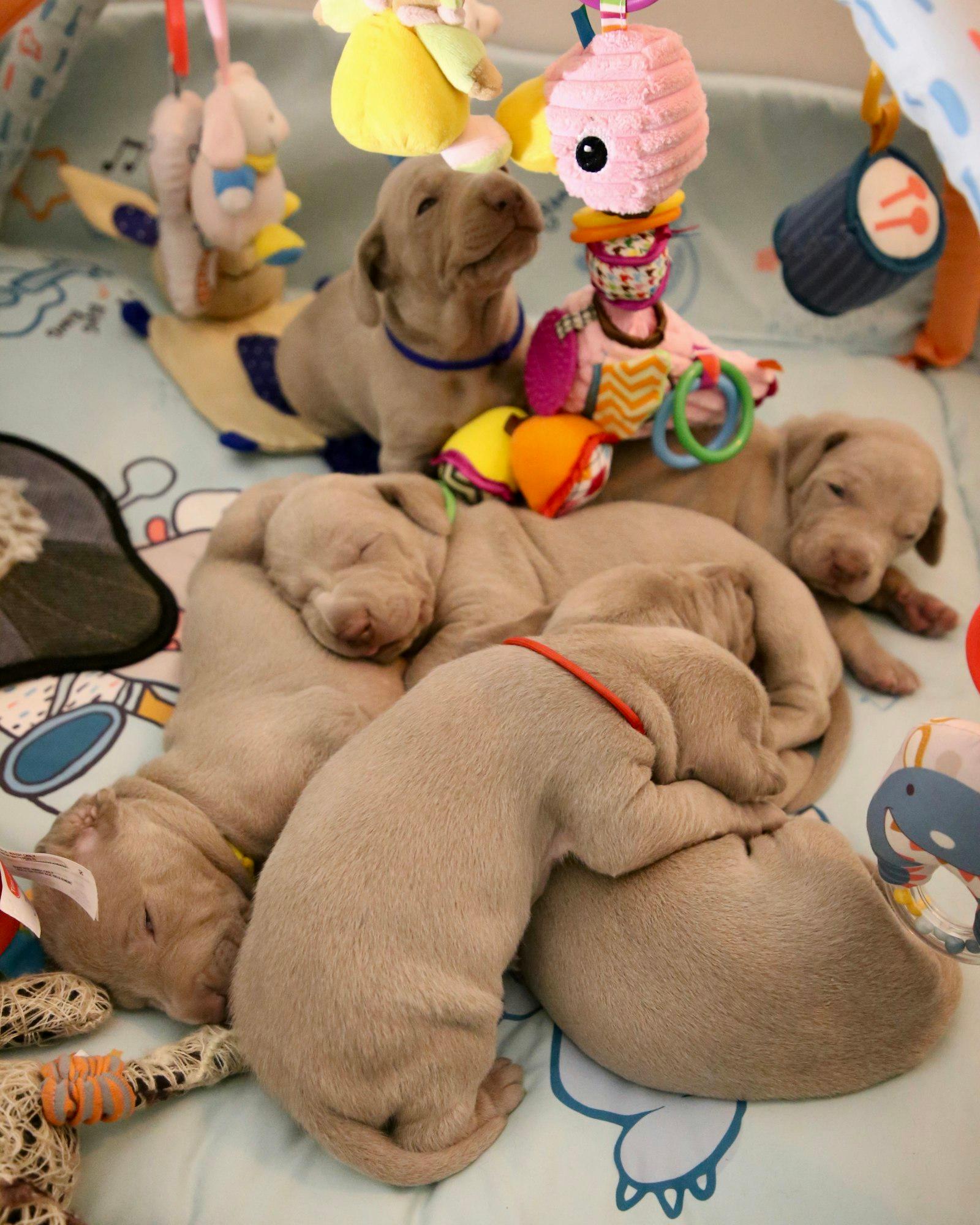
By the time most people start checking a breeder, they have already seen the photographs and chosen a name. That is the wrong order and everyone who has done it knows it afterwards.
What follows is a list you can work through before a deposit leaves your account. None of it requires expertise. Most of it is just asking for something specific and watching what happens next.
See the mother, where the puppies actually live
Not a photograph of her. Not "she is at the vet today". The dam, with the litter, in the place the puppies have been living.
You are checking two things. That the puppies were raised in a home or a proper facility rather than a shed behind one and that the mother's temperament and condition are what you were told. A dam who is thin, frightened or absent is the single most reliable warning sign there is and it is the one that cannot be produced on request.
If a breeder offers to meet you somewhere convenient instead — a car park, a motorway services, your own doorstep — the answer is no. There is no good reason for it.
Ask for health testing by name and ask to see the certificate
"Both parents are health tested" is not information. Every breed has its own screening programme: hip and elbow scoring, eye examinations, cardiac assessment, DNA panels for the conditions that run in that breed. Find out which ones apply to yours before you make the call — the national breed club publishes them.
Then ask for the certificates. A real one carries the dog's registered name and microchip or registration number, the date and the issuing body. It should match the dog standing in front of you. A screenshot with the identifying details cropped out is not a certificate.
Registration records ancestry, not quality
A pedigree from a national kennel club tells you who the ancestors were. It does not certify health, temperament or how the puppies were raised and it is not a substitute for the screening results above. Plenty of well-bred dogs have papers; so do plenty of badly bred ones.
The paperwork that should exist before you collect
Ask what you will be given on collection day and ask before you pay:
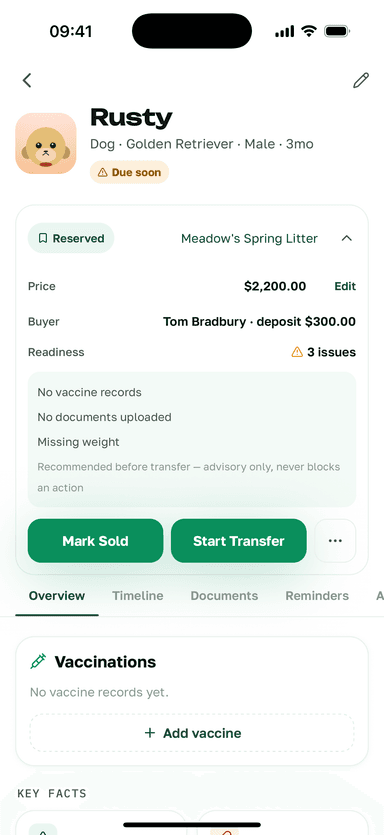
- Microchip details and the forms to transfer registration into your name.
- The vaccination record with product names, dates and lot numbers.
- Worming and parasite treatment dates and products.
- A sales contract setting out what happens if the puppy turns out to be unwell.
- The terms of any health guarantee, in writing, including what it requires of you.
- A diet sheet — what the puppy is eating now, how much and how often.
- Any screening certificates for the parents.
A breeder who has this ready has done it before. One who says they will "sort it out later" is telling you something.
The questions that are hard to fake
- How many litters does the mother have and how many has she had in total?
- At what age do puppies go to their new homes? Under eight weeks is a serious problem and in many
- What have the puppies been exposed to so far — household noise, handling, being picked up by
- Where do they sleep? Can I see it?
- What happens if my circumstances change and I cannot keep him?
That last one is the most telling question on the list. A breeder who is invested in the dogs will have an immediate answer and it will involve taking the dog back.
The signs worth walking away from
Several breeds available from the same person. A puppy that can be collected today. A request for a deposit before you have seen anything. Prices well below what the breed normally costs. And — the one people miss because it feels pleasant at the time — a breeder who asks you nothing at all. Being questioned about your home, your hours and your experience is a good sign, not an obstacle.
If the breeder keeps records digitally
Some breeders now hand over the puppy's history as a record rather than a folder. In EverPet that is a transfer pack: vaccinations, treatments, weights and documents, sent to the buyer and received into their own account, with the breeder's access ending at handover.
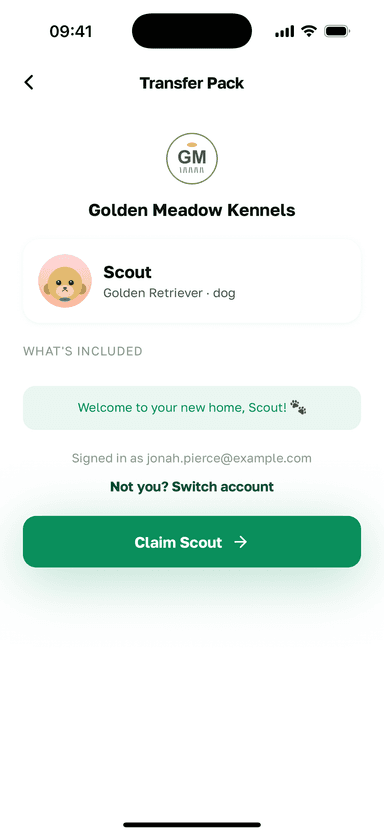
It is not a guarantee of anything about the breeder — no software is. What it does mean is that the history arrives complete and dated instead of being reconstructed from memory at your first vet appointment.
Before the deposit
- Have you seen the dam with the litter, in the place they live?
- Do you have the screening certificates, with names that match?
- Do you know exactly what paperwork arrives on collection day?
- Have you asked what happens if you cannot keep him?
Four answers. They cost one phone call and they are much cheaper than the alternative.
Related
Get EverPet
Free to start, on iOS and Android.