
Puppy vaccination schedule: what the first year looks like
Three rounds, a rabies shot and a booster around a year — plus the reason the dates move. What to expect and what only your vet can decide.
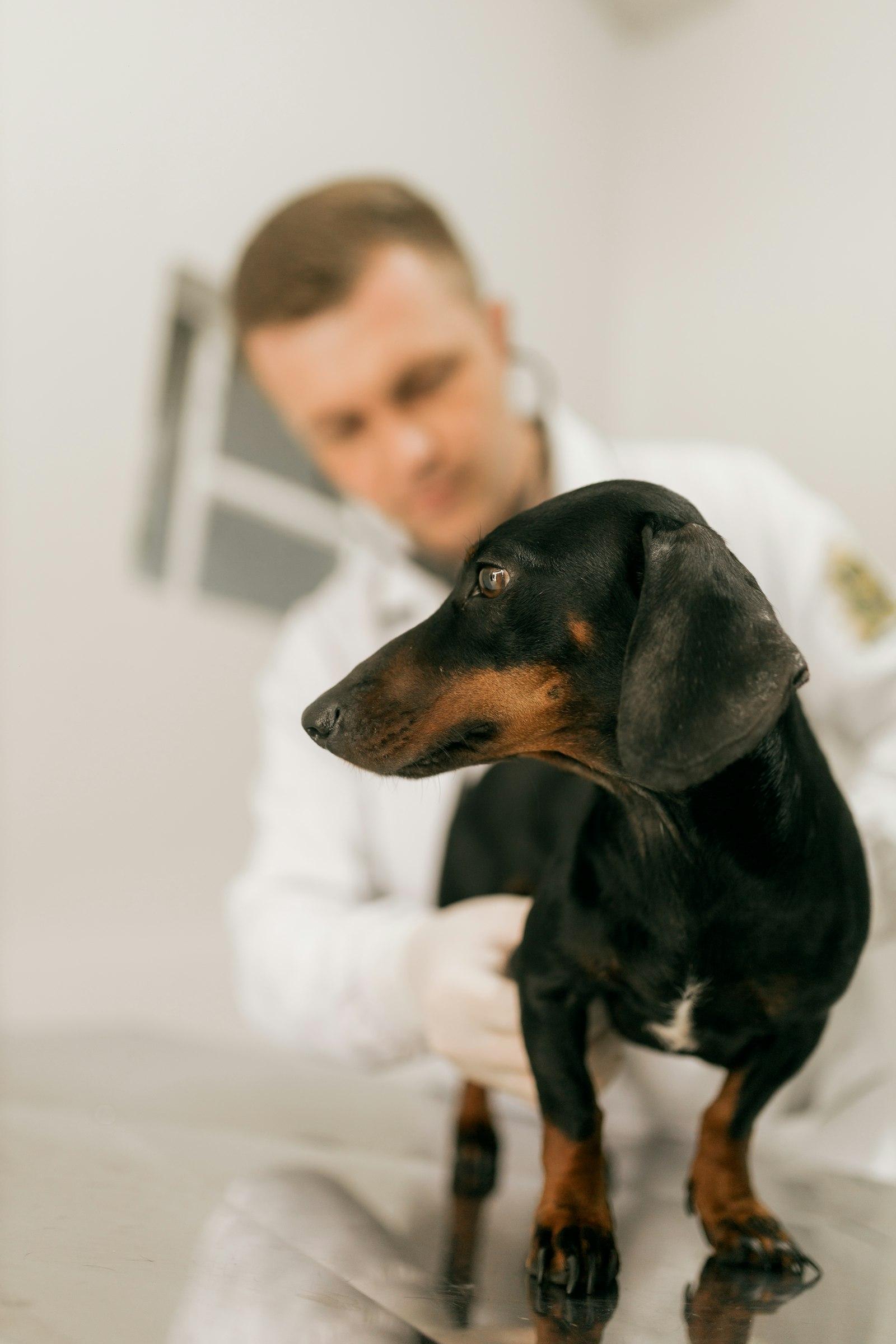
You come home from the first appointment with a small card, a few dates written in by hand and the words "see you in three weeks". The card is the schedule. This is what the dates on it mean, why there are several of them and why yours will not match a schedule you read online — including this one.
Nothing here is a schedule to follow. Vaccination timing is set by your vet, based on where you live, what is legally required there and the individual animal in front of them. The useful thing a guide can do is explain the shape of the year so the appointments make sense and so you know what to keep.
Why it takes several rounds instead of one
A newborn puppy is protected by antibodies from its mother, absorbed in the first hours of life. That protection fades over the following weeks — and while it lasts, it does two things at once. It defends the puppy and it neutralises a vaccine before the puppy's own immune system can respond to it.
The problem is that nobody knows the exact week that protection runs out for your particular puppy. For one it may be at eight weeks, for another closer to sixteen. There is no routine test for it.
So the answer is repetition. Doses are given at intervals across that whole window, so that whenever the maternal antibodies do fade, a dose lands soon afterwards. The final dose in the series is the one most likely to have done the real work — which is why finishing the course matters more than starting it early.
The shape most first years take
In broad terms and with every date subject to your vet's judgement:
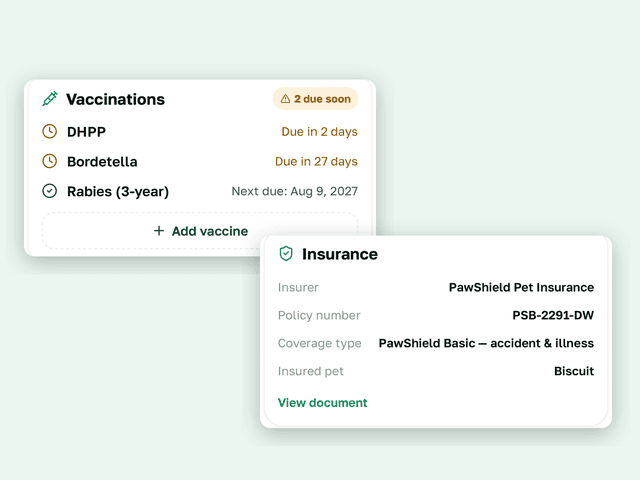
- Around 6 to 8 weeks. The first core combination. Often given by the breeder before the puppy
- Around 10 to 12 weeks. The second dose.
- Around 14 to 16 weeks. The third. This is the dose that closes the maternal-antibody window
- Rabies. Usually from twelve weeks, but the timing here is set by law where you live, not by
- Around twelve months. A booster that consolidates the puppy series.
On the card, the core combination usually appears as an abbreviation — DHPP, DAPP, DA2PP and similar — covering distemper, adenovirus (hepatitis), parvovirus and often parainfluenza. Different manufacturers use different letters for the same ground.
The vaccines that depend on where you actually live
Beyond the core list there is a second group whose value is entirely situational: leptospirosis, Bordetella, canine influenza, Lyme disease and others, depending on your region.
These are not lesser vaccines. They are risk questions. A dog that swims in standing water, one that boards in kennels, one that lives where ticks are endemic and one that lives in a fifth-floor flat and walks on pavement do not face the same risks. This is the part of the appointment worth spending your questions on — describe the dog's actual life, honestly and let the recommendation follow from that.
The two weeks people plan around badly
Immunity is not complete on the day of the last injection. It takes roughly a fortnight afterwards for the response to mature.
That collides with something else. The window in which a puppy learns most easily that the world is normal — traffic, other dogs, vacuum cleaners, children, being handled by strangers — closes early, around twelve to sixteen weeks. Wait for full immunity before letting the puppy meet anything and you protect against infection at the cost of a fearful adult dog.
There is no clean answer, which is precisely why it is a conversation to have with your vet rather than a rule to take from an article. Most of the ground is found in controlled exposure: clean private gardens, the homes of vaccinated adult dogs, carrying the puppy through busy places, puppy classes that require proof of vaccination to date.
What the record has to contain to be worth anything later
A vaccination entry is asked for by boarding kennels, groomers, puppy classes, insurers, border officials and — if you ever sell or rehome the dog — the next owner. All of them want the same details:
- The product name of the vaccine given.
- The batch or lot number, printed on the sticker the vet peels off the vial.
- The date it was given.
- The clinic's stamp and the vet's signature.
- The microchip number, once the animal is chipped.
A phone photo of the card that crops off the lot number is not a record. Neither is a note in your calendar saying "second jab done". Photograph the whole page, flat, with all four corners in frame, every time a new line is added.
Keeping it so the next due date finds you
This is the part EverPet handles. You photograph the card, the app reads the printed fields into a structured record and the next due date becomes a reminder that arrives on time instead of a date on a card in a drawer.
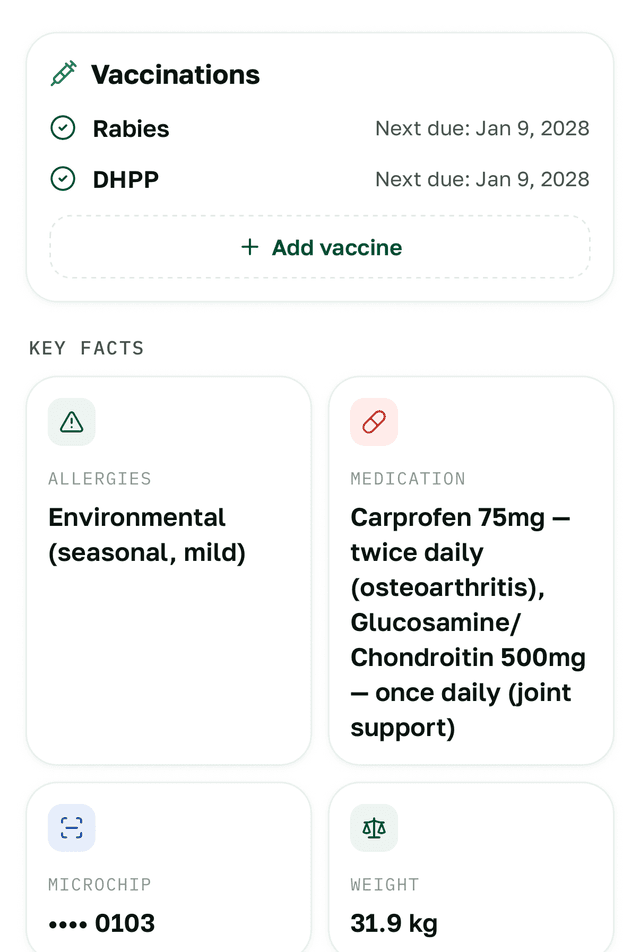
What it will not do is invent a schedule. It reads what the vet wrote; it does not decide what should have been written, it does not tell you a dose is late or early and it does not diagnose anything. If the card is ambiguous, the answer is the clinic that issued it.
Before the next appointment
Three things worth doing tonight:
- Photograph the card as it stands now, whole page, readable lot numbers.
- Write down the questions about non-core vaccines — where the dog walks, whether it will board,
- Check what rabies vaccination your country requires and by what age, if you have not already.
Пов'язане
Встановіть EverPet
Безкоштовно для початку, на iOS та Android.