
A female dog's first heat: the timeline week by week
What the first few weeks usually look like, which dates are worth writing down and the signs that mean you should call your vet.
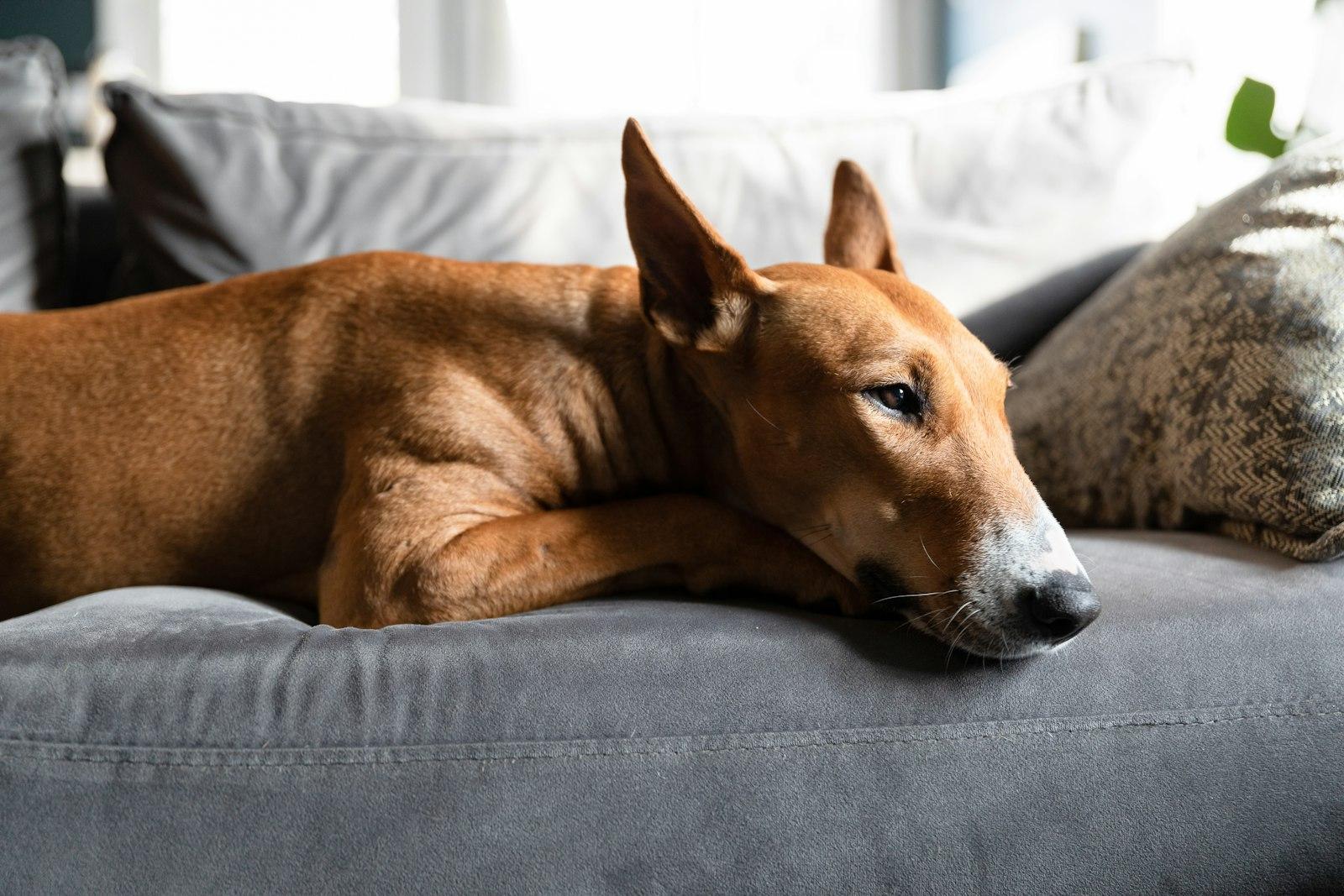
The first heat tends to arrive without warning. One morning there are a few spots of blood on the floor and a dog who is suddenly either very clingy or very short tempered. Nothing is wrong. It helps to know what the next few weeks usually look like and which dates are worth writing down.
Nothing here replaces your vet. Timing differs a great deal between breeds and between individual dogs. Anything that worries you is a reason to call the clinic, not to keep reading.
When the first heat usually arrives
Most female dogs have their first heat somewhere between six months and two years of age. Small breeds tend to start early. Large and giant breeds often start much later. If you are unsure whether your dog is early or late for her breed, your vet can tell you what is typical.
The four stages
Vets describe the cycle in four stages. The lengths below are typical figures and your dog may not match them.
- Proestrus, about a week to ten days. The vulva swells and there is a bloody discharge. Male dogs take an interest but she turns them away.
- Estrus, about a week. The discharge usually becomes lighter. This is the fertile stage.
- Diestrus, about two months. The visible signs fade.
- Anestrus, several months of rest before the next cycle.
Week by week
Week one. Bleeding starts and the swelling is obvious. She may lick herself more, urinate more often and seem needier or more irritable than usual. Write down the first day you see blood. Every later date is counted from it.
Week two. The discharge often thins and turns paler. She may hold her tail to one side around other dogs. This is when she can become pregnant. It can happen in her very first heat.
Weeks three and four. The swelling goes down and the discharge stops. Keep managing her as before until the signs are fully gone.
Afterwards. Many dogs come into heat again roughly six months later. Early cycles are often irregular, so treat that as a rough guide.
Living with it for a few weeks
- Keep her away from unneutered males for the whole heat, not only the days she bleeds.
- Walk her on a lead and do not leave her alone in the garden.
- Skip the dog park until it is over.
- Washable dog pants protect furniture. Change them often and keep her bedding clean.
- Give her a quiet place to rest if other pets in the house bother her.
What to write down
A few dates make the next heat predictable and give your vet something concrete to work with.
- The first day of bleeding
- The day the discharge changed colour
- The day bleeding stopped
- The day the swelling was gone
- Changes in appetite, mood or energy, with dates
- Anything you asked your vet and what they said
When to call the vet
Call your clinic promptly if you notice any of these, during the heat or in the weeks after it:
- Discharge that smells bad or looks like pus
- A swollen or painful belly
- Vomiting, drinking much more than usual or refusing food
- Unusual tiredness or weakness
- Bleeding that seems heavy to you or goes on for longer than about three weeks
- A heat that seems to start very young or never properly ends
You do not have to work out what is behind any of these. That is the vet's job. They would rather hear from you early.
Spaying
Whether to spay and when to do it is a decision for you and your vet. The right timing depends on breed, size and the individual dog. Bring your dates to that conversation.
Keeping the dates
Heat dates belong with the rest of her records, next to vaccinations and vet visits. A reminder set a few months ahead, in EverPet or on any calendar, means the next heat does not catch you out. The puppy vaccination schedule guide covers the other dates of the first year.
Пов'язане
Встановіть EverPet
Безкоштовно для початку, на iOS та Android.